
Ningyuan Fastener
Choosing the right screw studs for your project can greatly impact performance and longevity. According to a recent industry report by the Fastener Quality Act, over 70% of failures in mechanical assemblies are linked to inadequately selected fasteners, highlighting the importance of informed choices. Experts recommend assessing specific project needs before making a selection.
John McAllister, a renowned fastener engineer, emphasizes, "The right screw stud can make or break a connection." His insights underscore the critical role that screw studs play in safety and reliability. Different materials, lengths, and coatings need careful consideration. For instance, stainless steel studs provide excellent corrosion resistance but may not be suitable for all environments.
Looking at market trends, the demand for high-performance screw studs is steadily growing, driven by sectors such as construction and automotive. However, many users still overlook key specifications. Understanding torque requirements and load capacity is essential for optimal performance. Striking a balance between cost and quality can be challenging, yet it is crucial for long-term success.
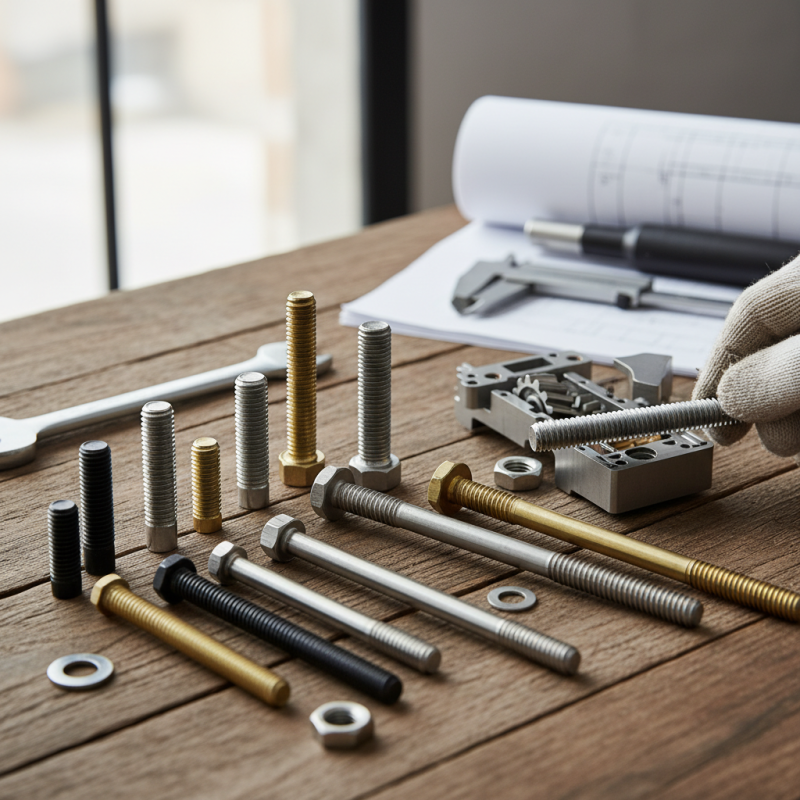
When selecting screw studs, it’s crucial to understand the different types and their specific applications. Screw studs are typically categorized into several types, including standard, shoulder, and locking variants. Standard screw studs are versatile and commonly used for various fastening needs. Shoulder screw studs, with their extended neck, provide a pivot point or serve as a mounting base. Locking screw studs feature a mechanism that prevents loosening, making them ideal for vibration-prone environments.
Choosing the right screw stud involves assessing your project’s requirements. Think about the materials you’ll be working with. Some materials require special screw stud types to ensure a secure fit. For instance, softer materials may benefit from studs designed to distribute load evenly. Reflecting on the specific use case can guide you to the best choice.
Remember, not all projects are straightforward. You may find that initial selections don’t work as anticipated. Testing different screw types can lead to unexpected insights. Engaging with professionals can provide valuable perspectives on selection challenges. Always be open to feedback, as the learning curve is part of the process.
Choosing the right screw studs is crucial for any project. Several factors come into play during selection. The material is a primary consideration. Common choices include stainless steel, brass, or nylon. Each material has different strengths and weaknesses. For instance, stainless steel is durable but may corrode in certain environments.
Thread type matters too. Fine threads offer better grip but can be more prone to stripping. Coarse threads, on the other hand, are easier to install but may not hold as strongly in softer materials. Understanding these differences can lead to better choices for specific applications.
Dimensions should not be overlooked. Length and diameter directly affect the stud's load-bearing capacity. A longer stud may seem appealing but could cause instability. Accuracy in measurements is essential. Finally, consider the environmental factors. Temperature variations and exposure to chemicals can impact material performance over time. Taking the time to assess these factors can significantly enhance overall project reliability.
This chart illustrates the key factors to consider when selecting screw studs, rated on their importance level from 1 to 10. Material quality and load capacity are crucial, while thread type and length also play significant roles.
When choosing screw studs, material selection is crucial for ensuring durability and performance. Various compositions have unique strengths and weaknesses. For instance, stainless steel is common due to its corrosion resistance. Reports indicate that stainless steel screws can withstand significant tensile strength, making them suitable for numerous applications.
Carbon steel is another option, often used in construction. While it is strong, it may require protective coatings to prevent rust. If used in wet conditions, without treatment, carbon steel can corrode quickly. Although the initial savings on carbon steel might be tempting, consider the long-term costs of maintenance and replacement.
Tip: Always assess the environment where the screw stud will be used. Humid or saline areas demand materials with higher corrosion resistance.
For environments requiring lightweight components with high strength, aluminum might be a good fit. However, it is softer than steel and might not handle heavy loads effectively. Balancing weight, strength, and environmental conditions is key to effective material selection.
Tip: Review industry reports highlighting failure rates of different materials. Data suggests that improper selection leads to 30% of structural failures in critical applications. Always research before making a final decision.
When selecting screw studs, the thread design is a critical factor. Thread patterns directly influence how well the screw fits and performs in different materials. Fine threads, for instance, offer better tension control, while coarse threads provide superior grip in softer materials. Understanding these nuances can optimize the performance of your applications.
Another point to consider is compatibility. Different materials react differently to various thread designs. For instance, using a stud designed for metal in a plastic application might lead to stripping or reduced holding power. This mismatch can undermine the integrity of your work. It’s essential to balance the thread type with the material at hand.
Reflecting on past projects can reveal common pitfalls. Maybe you chose a screw stud with an unsuitable thread design before. Identifying those mistakes is part of the learning process. Each choice you make shapes the outcome, whether successful or not. Embracing that journey can enhance your future projects and deepen your understanding of materials and designs.
When installing screw studs, precision is key. First, ensure you select the correct tools. A power drill with adjustable torque settings will help prevent over-tightening. This is crucial; too much pressure can strip the threads.
Proper alignment during installation is essential to avoid future issues. Mark your drill points carefully. A misaligned stud can lead to instability. Use a level to verify your alignment. Additionally, pre-drill holes slightly smaller than the stud diameter for easier insertion.
Be mindful of the material you are working with. Different materials will require different techniques. For instance, softer woods can split if not approached correctly. Sometimes, even seasoned installers can make mistakes. It's important to double-check your work and reflect on any missteps. Adjustments can make a significant difference in the final result.
| Dimension | Material | Thread Type | Coating | Load Capacity |
|---|---|---|---|---|
| M6 x 30mm | Steel | Metric | Zinc-plated | 500 N |
| M8 x 50mm | Stainless Steel | Metric | Black Oxide | 800 N |
| M10 x 60mm | Carbon Steel | Metric | Chrome Plated | 1000 N |
| M12 x 75mm | Alloy Steel | Metric | Galvanized | 1200 N |
: Material selection ensures durability and performance, affecting the lifespan and effectiveness of screw studs.
Stainless steel offers excellent corrosion resistance and significant tensile strength, making it suitable for many applications.
Carbon steel can corrode quickly without protective coatings, especially in wet conditions, leading to potential long-term costs.
Aluminum is lightweight and strong but is softer than steel, which may limit its load-bearing capabilities.
Thread design influences fit and performance; fine threads offer tension control, while coarse ones grip better in softer materials.
Using mismatched thread designs can lead to stripping and reduced holding power, compromising structural integrity.
Proper alignment is key; misalignment can cause instability and future issues in your project.
Using a power drill with adjustable torque prevents over-tightening, crucial for maintaining thread integrity.
Even experienced installers can misalign studs or choose incorrect techniques, so double-checking work is essential.
Yes, reflecting on previous choices can enhance decision-making and improve future project outcomes.
Choosing the right screw studs is essential for ensuring the effectiveness and longevity of your projects. Understanding the different types of screw studs and their specific applications is the first step in the selection process. Key factors to consider include the material composition, which impacts durability, and the thread design, which can significantly affect performance and compatibility with various materials.
When selecting screw studs, it is crucial to prioritize durability by choosing the appropriate materials and to understand how thread design influences both installation and the overall strength of the connection. Additionally, following proper installation techniques can help achieve optimal results, ensuring that the screw studs perform effectively in their intended applications. By considering these factors, users can make informed decisions that lead to successful outcomes in their projects involving screw studs.
