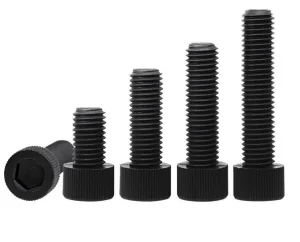
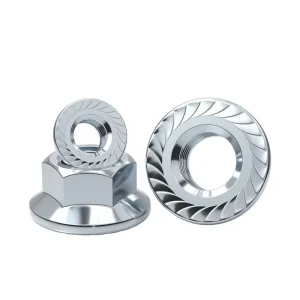
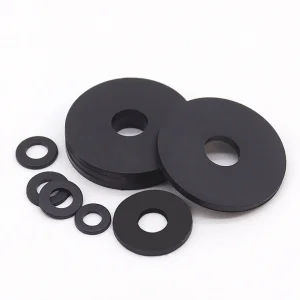
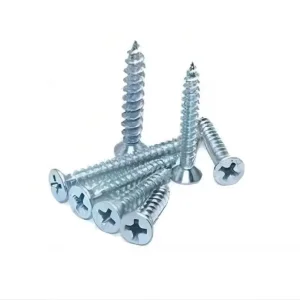
 Ningyuan Fastener
Ningyuan Fastener
Ningyuan Fastener
Engineered for high-stress connections, seismic stabilization, and structural efficiency
Founded in 2005 (formerly operating as Jin Langtao), Handan Ningyuan Fastener Manufacturing Co., Ltd. has established itself as a premier industrial fastener manufacturer. Located in Handan Yongnian—globally recognized as the capital of fastener manufacturing in China—our operations have consistently led the region in structural integrity, technological adaptation, and high-performance product designs.
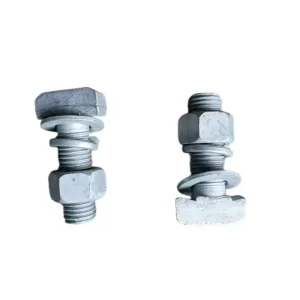
Over the past 18 years, through persistent R&D and infrastructural expansion, our enterprise has integrated design, engineering, production, and international logistics under a single highly efficient roof. We specialize in high-end structural standard parts, photovoltaic new energy mounting arrays, building electromechanical seismic systems, integrated pipe gallery support systems, steel structure construction bolts, and specialized self-drilling fastener lines.
Comprehensive breakdown of mechanical structures, global procurement trends, and quality benchmarks
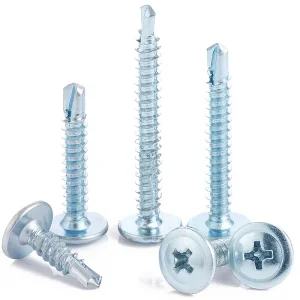
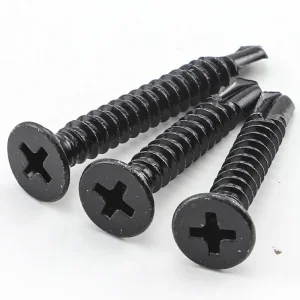
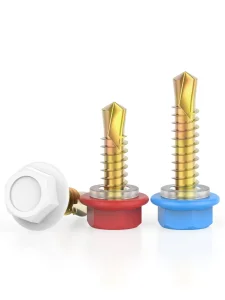
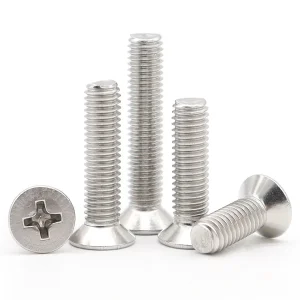
The term "Quick Tooth Screws" (often referred to as fast-thread self-drilling or high-efficiency self-tapping fasteners) defines a class of hardware engineered for accelerated deployment in light and heavy-gauge structural metal sheets. Unlike conventional screws that feature uniform, standard pitches, quick-tooth configurations incorporate double-lead threads, aggressive tip profiles, and variable pitch spacing. This dual-lead thread form allows the fastener to penetrate and feed twice as fast per revolution, reducing the physical strain on operators, decreasing drilling cycles, and minimizing thermal buildup during installation.
From an engineering standpoint, the mechanical advantage of a quick tooth profile lies in the reduced torque-to-clamp ratio. In structural engineering, particularly when fastening cold-rolled steel profiles for photovoltaic frames or seismic piping systems, minimizing micro-cracking around the pilot hole is vital. Standard single-lead threads create localized friction peaks, which can lead to galling in stainless steel or strip-out in aluminum profiles. Quick-tooth designs mitigate this by sharing the mechanical loads across alternating high and low thread profiles (high-low thread configurations). This distributes structural load paths more evenly through the material substrate, ensuring high pull-out resistance, improved strip torque levels, and vibration stability.
Procurement agencies managing utility-scale renewable energy installations, structural steel fabrication plants, and massive building facade constructions require highly standardized components. The global demand for quick-tooth screws is heavily influenced by the transition toward zero-maintenance construction elements. Procurement officers are no longer focusing solely on low per-unit pricing; instead, they prioritize the Total Cost of Ownership (TCO) and Life Cycle Assessment (LCA) of the fasteners.
Key parameters defining modern procurement criteria include:
| Thread Type / Style | Material Substrate | Ultimate Tensile Strength (kN) | Shear Resistance (Min) | Salt Spray Corrosion Rating |
|---|---|---|---|---|
| Quick Tooth Dual-Lead | C1022A (Hardened Carbon) | 12.5 kN | 8.2 kN | 1,000 Hours (Ruspert coated) |
| Bi-Metal (304 Body + Carbon Tip) | AISI 304 / Carbon Hybrid | 14.8 kN | 9.5 kN | 2,000 Hours (C5 Industrial Class) |
| High-Low Fast Thread | Nylon-Cap / Carbon Steel | 10.2 kN | 7.0 kN | 750 Hours (Zinc Galvanized) |
| Countersunk Self-Drilling | High-Tensile Alloy | 15.1 kN | 10.4 kN | 1,200 Hours (Geomet) |
Our quick tooth fastener solutions are optimized for deployment across critical infrastructure sectors:
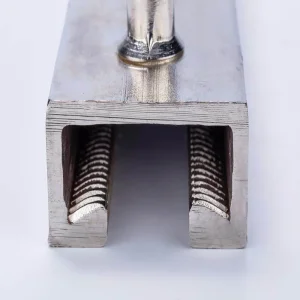
Used to fix C-shaped and U-shaped solar brackets. Provides high clamp retention under thermal cycling and heavy wind uplifts on open ground installations.
Integrates heavy structural cladding and curtain walls to secondary steel frames. The self-drilling capacity eliminates secondary tapping operations.
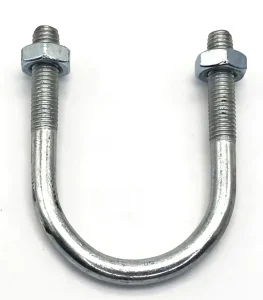
Secures building service hangers and concrete wedge expansion anchors in dynamic environments, protecting against cyclic vibration failure.
The industrial fastener industry is transitioning toward digital trace integration and structural intelligence. Handan Ningyuan Fastener is actively researching next-generation coatings and smart fastening solutions. This includes developing sensor-embedded structural bolts designed to monitor preload loss in wind turbines and offshore platforms. Our upcoming metallurgical focus centers on resolving hydrogen embrittlement in high-tensile fasteners through low-hydrogen baking cycles and specialized acid-free pickling phases during manufacturing.
Furthermore, our environmental initiatives aim to align our production stages with global carbon neutrality benchmarks. This involves lowering carbon outputs by recovering waste heat from heat-treatment furnaces and adopting solar micro-grids across our 20,000 square meter factory space.
To ensure reliability and performance in high-risk engineering environments, all fastener classes undergo rigorous quality control protocols. Our laboratory is equipped to conduct spectral chemical analysis, hardness profiling (Vickers & Rockwell), salt spray chamber testing (up to 3,000 hours), tensile yield evaluations, and torque-limit assessments.
Handan Ningyuan Fastener meets international criteria, including the ISO 9001:2015 quality management system, EU RoHS directive compliance, REACH chemical protocols, and automotive-grade ELV certifications (2000/53/EC). These certifications reflect our commitment to delivering zero-defect shipments to partners across North America, the European Union, South America, and Southeast Asia.
Expert responses to key procurement and performance inquiries
Verified solutions for photovoltaic racking, pipe galleries, and heavy industrial applications
Inquire about custom rates, bulk orders, testing reports, or sample shipments
For partnerships, technical installations, or design consulting, please contact Handan Ningyuan Fastener Manufacturing Co., Ltd. Our technical team is available to assist with engineering drawings and specification selections.